
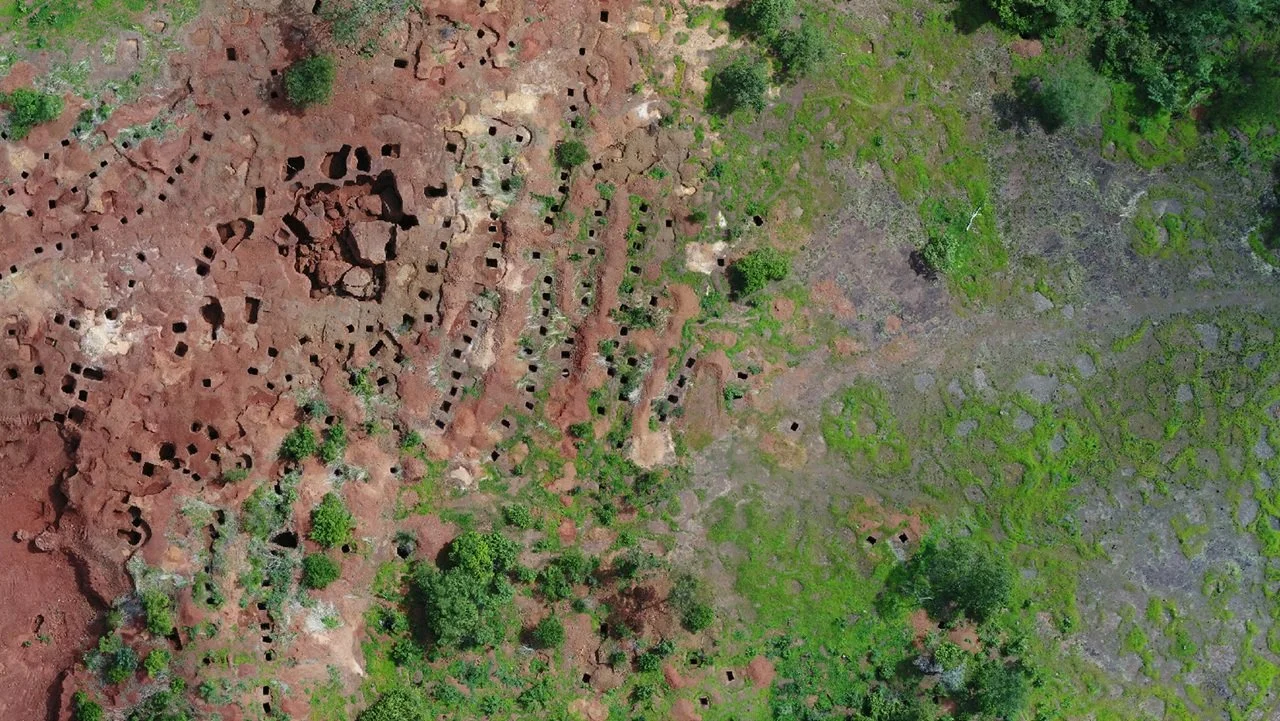
Entering a Joint Venture or Acquisition?
Consider having Mynah Exploration take a look at the gold project before committing.
Key Facts About the Geology of Tropical Laterite Supergene Gold
Are gold nuggets really formed in laterite soils?
Yes! Warm and humid climates, over hundreds of millions of years, have deeply weathered the rocks in the tropics.
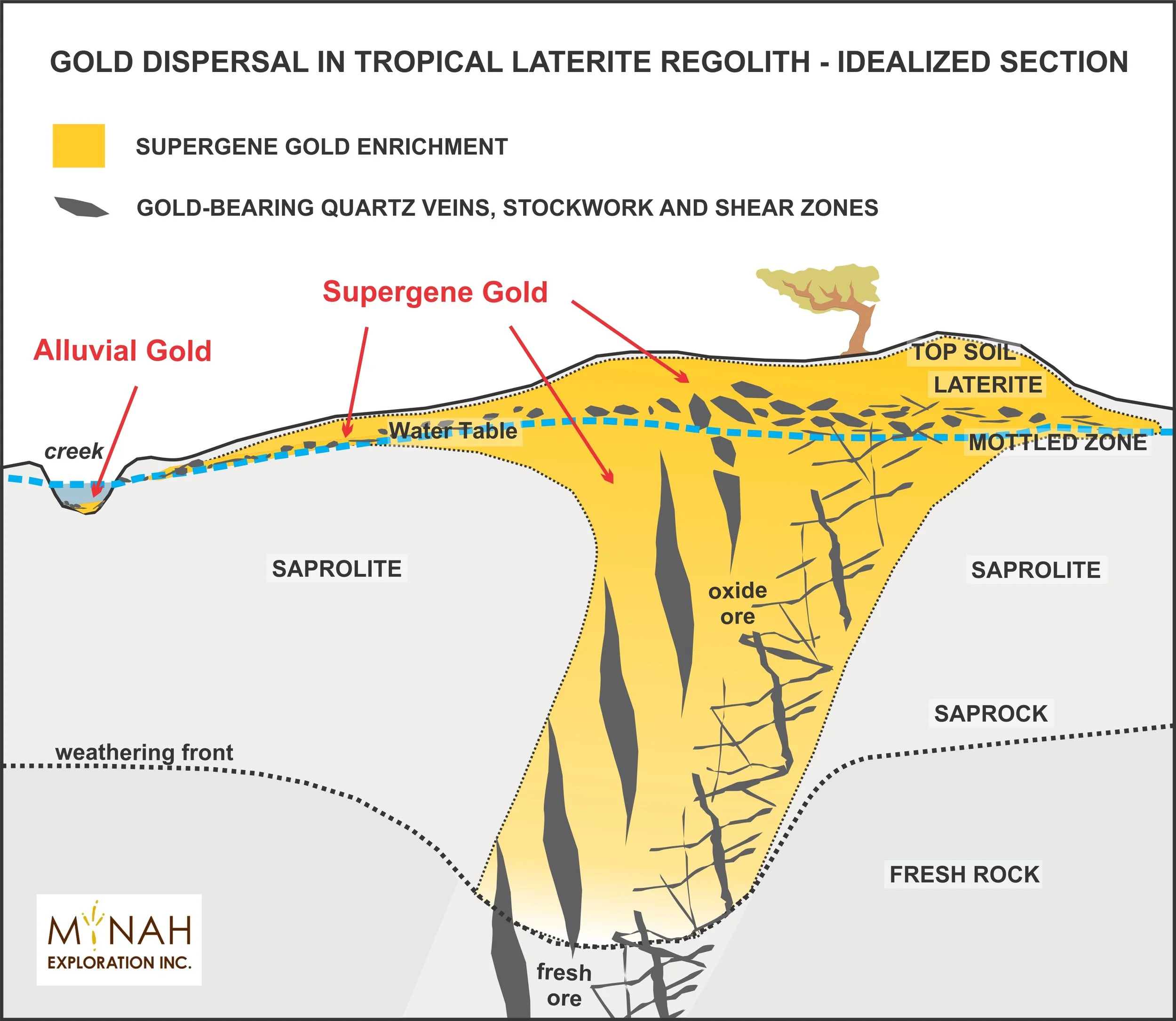
Gold vein systems exposed to tropical weathering develop a mushroom-or umbrella-shaped supergene gold enrichment blanket within the overlying laterite soils..
Oxidation of sulphides like pyrite release acid to the groundwater, resulting in deep regolith formation and facilitating gold particle mobility.
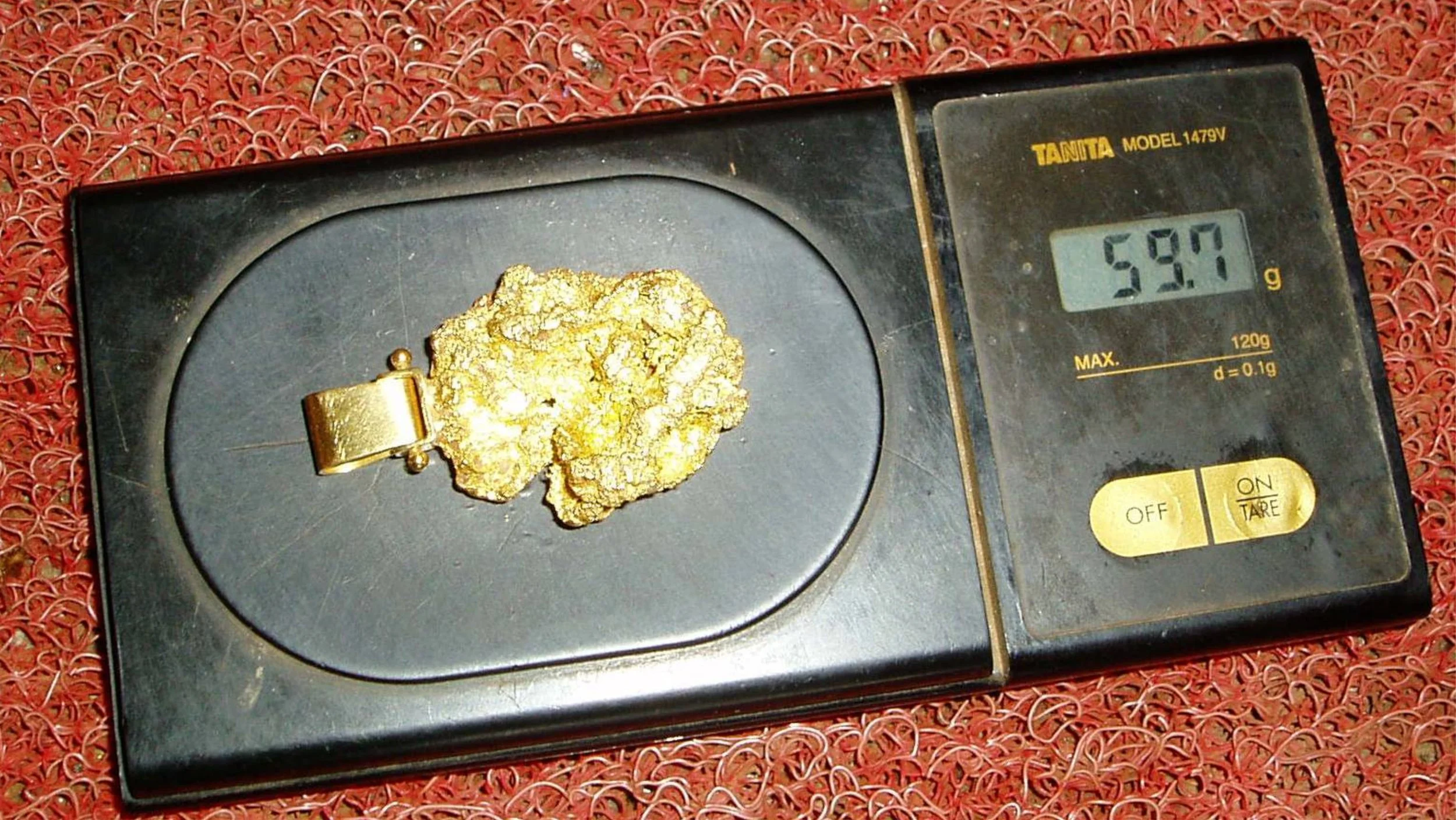
Over geologic time, the gold particles adhere together into high-purity gold nuggets.
Through gravity the nuggets concentrate along the base of the laterite.
Gold nuggets are the results of supergene gold formation in tropical climates.
Were Yukon gold nuggets also formed in laterite soils?
Yes! The gold nuggets from the 1896 Yukon Klondike Gold Rush, found in placer deposits within rivers and creekbeds, originated from ancient tropical laterite soil.
Long before the Yukon moved to its present northern latitude, the region was situated near the equator. Prolonged, intense tropical weathering broke down the host bedrock into thick, iron-rich laterite soils.
The surface exposures of gold vein systems developed gold enrichment caps with gold particles ranging from tiny granules to .
The Yukon-Tanana terrane slowly rode the Pacific and Kula tectonic plates on a long, northward journey away from the tropical latitudes.
As this terrane eventually collided with the North American plate, mountain-building uplift occurred. In the unglaciated pockets of the Klondike, millions of years of sub-arctic weathering and stream erosion broke down the ancient laterite layers. Because of this intense mechanical grinding, much of the gold was reduced to fine gold dust.
Consequently, massive nuggets are rare, though legendary specimens weighing up to several pounds and more have been recovered.
Are Australian gold nuggets also the result of supergene tropical laterite weathering?
Again, yes! Australia’s incredibly large gold nuggets are the ultimate global masterpiece of tropical laterite weathering, supergene enrichment, and a complete lack of glaciation.
Tropical laterite processes in Australia are much more intense and deeper than elsewhere in the world.
Due to immense tectonic plate stability over geologic time, uninterrupted, very deep weathering occurred on flat landscapes.
As Australia drifted north, the climate shifted from wet tropical to arid. This dried the laterite into a hardened iron duricrust, while turning the groundwater highly saline and acidic. The results was exceptionally thick, leached soil horizons that concentrated pure gold nuggets close to the surface..
Key Facts About Laterite, Duricrust and Pisoliths
Is it laterite, ferricrete or duricrust?
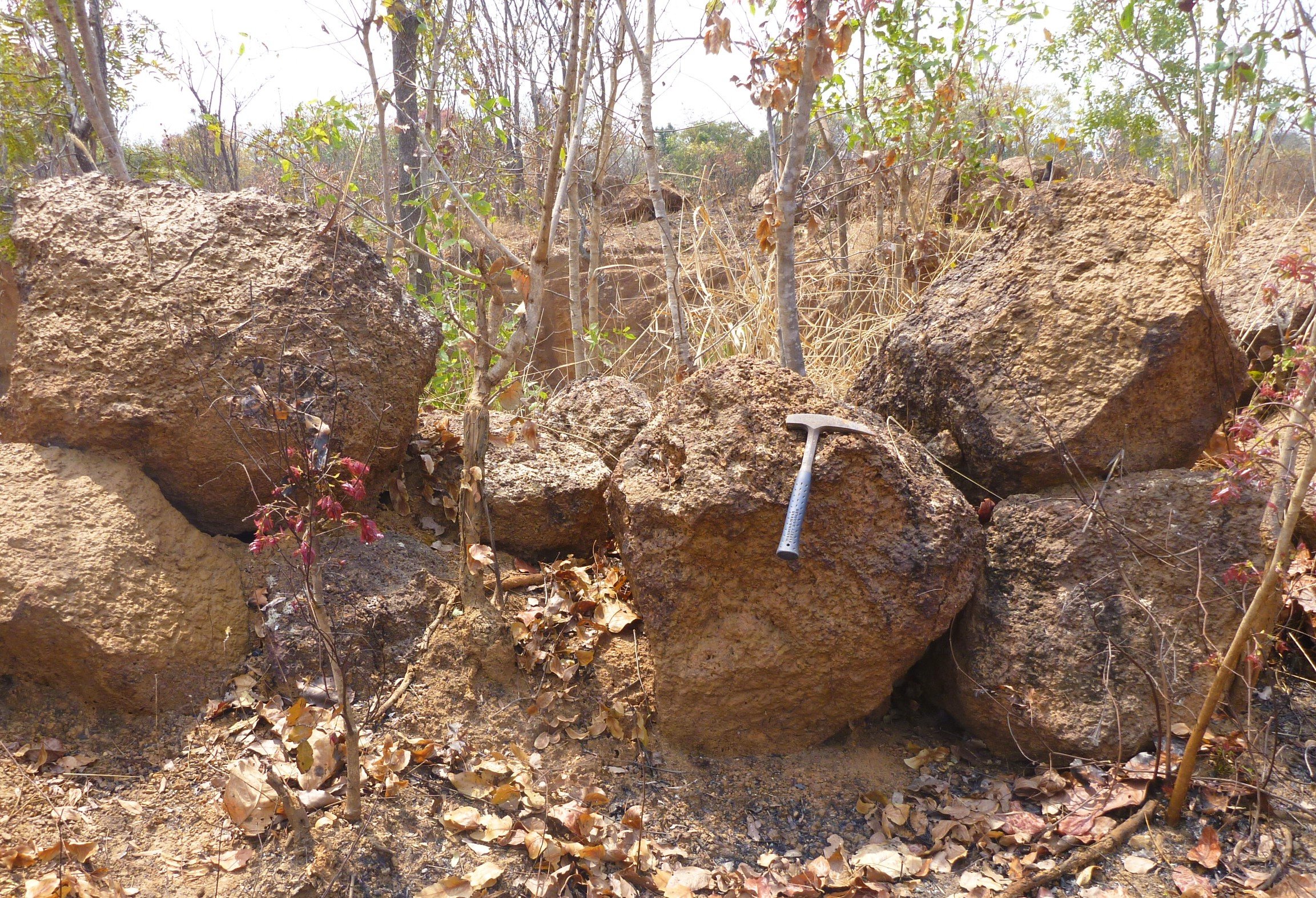
Laterite: This is the soft, red, clay-rich residual soil (soft enough to push a thumb through).
Duricrust: This is the hardened, baked, red-brown, rock-hard layer formed from laterite after intense dehydration. It marks ancient, unglaciated plateau tops.
Ferricrete (high iron), silicrete (high silica), or hard pan are other words for duricrust.
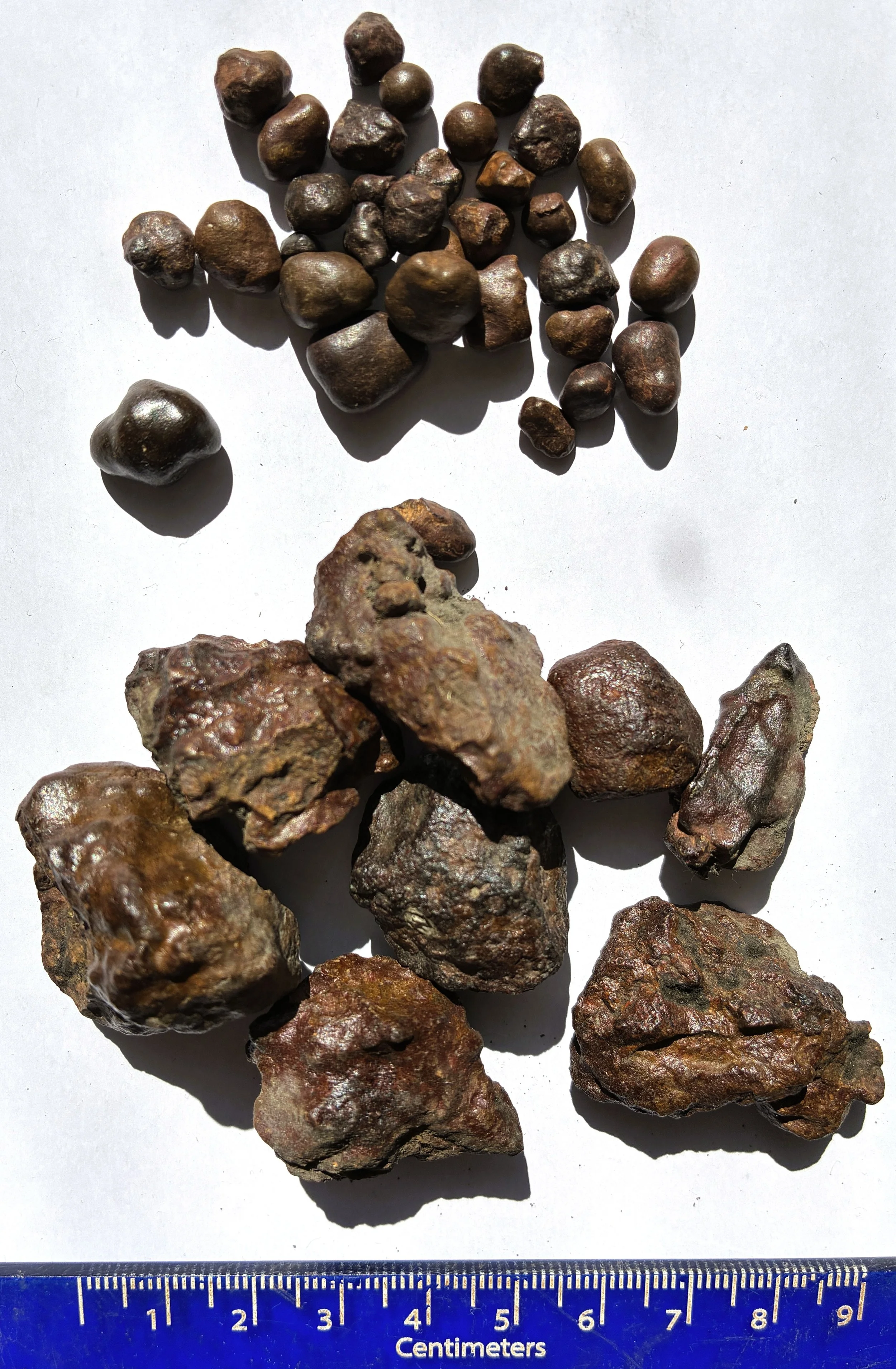
What are nodules and pisoliths?
Nodules and Pisoliths: These round, gravel-like structures are the physical evidence of a changing climate. When conditions shift from dry back to wetter, the tough duricrust naturally dismantles and breaks down, creating these distinct hydrated grains.
Can you sample duricrust for geochemistry programs?
Ideally, no. Duricrust is leached and can contain transported material. It is also tough to break.
Duricrust tends to cover plateau tops, marking an ancient landscape.
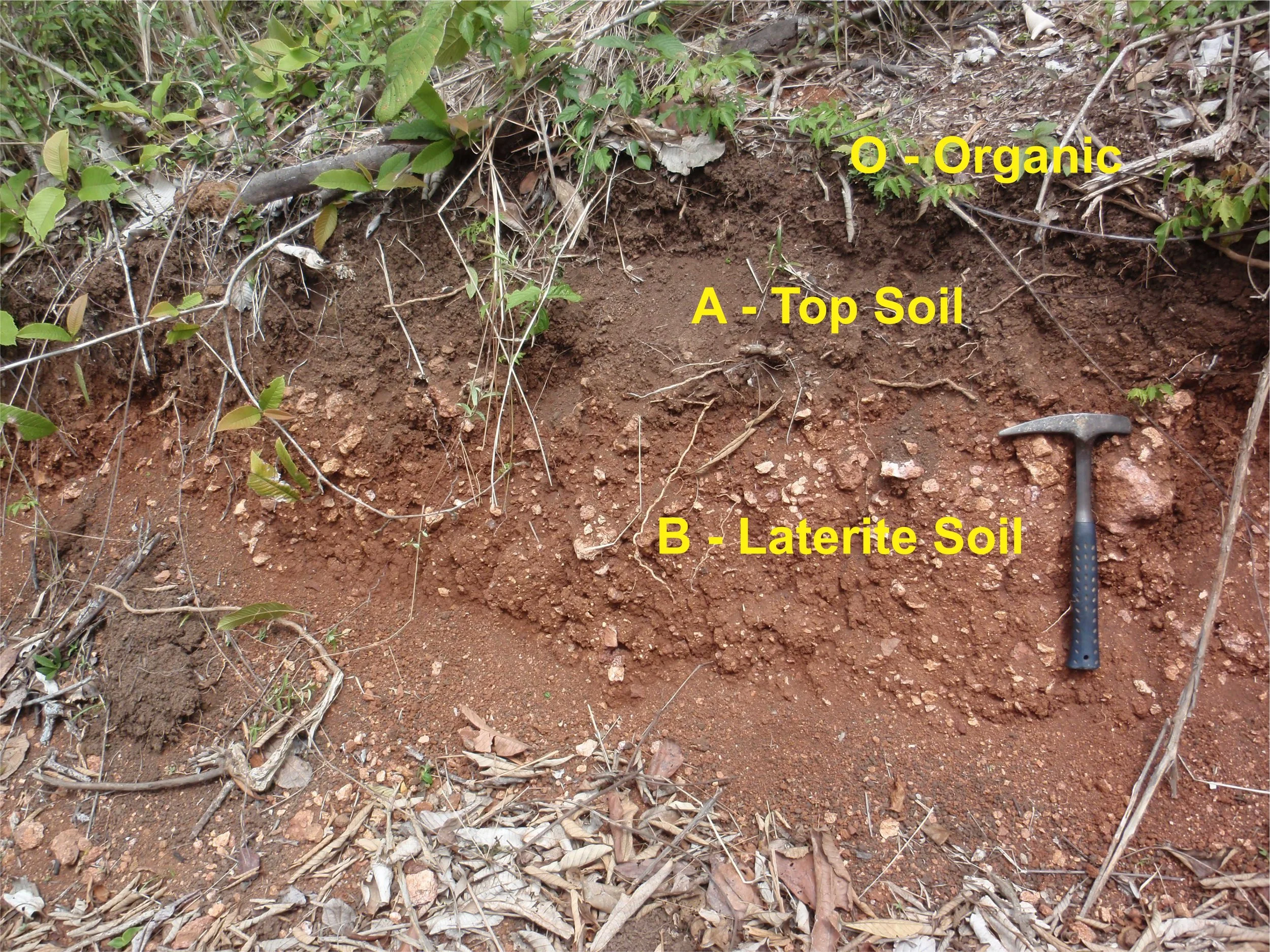
Laterite, the B soil sample, is the ideal soil sample.
Supergene Gold Mushroom Dispersal
In tropical environments, intense chemical weathering of a gold system breaks down primary sulfides, allowing gold to dissolve and reprecipitate to form nuggets in the overlying laterite soil..
The Opportunity: Chemical enrichment can turn a low-grade 1 g/t Au primary deposit into a 3 g/t Au oxide blanket near surface.
The Risk: Without a sophisticated geological model, "nugget effect" in the laterite and/or saprolite can result in misleading resource estimates and failed feasibility studies.
The Miners: Artisanal and small-scale gold miners (ASGM) also target the high purity gold nuggets that are in the relatively soft laterite and saprolite soils of the tropical regolith.
Exploration Targeting in Savannah Terrain
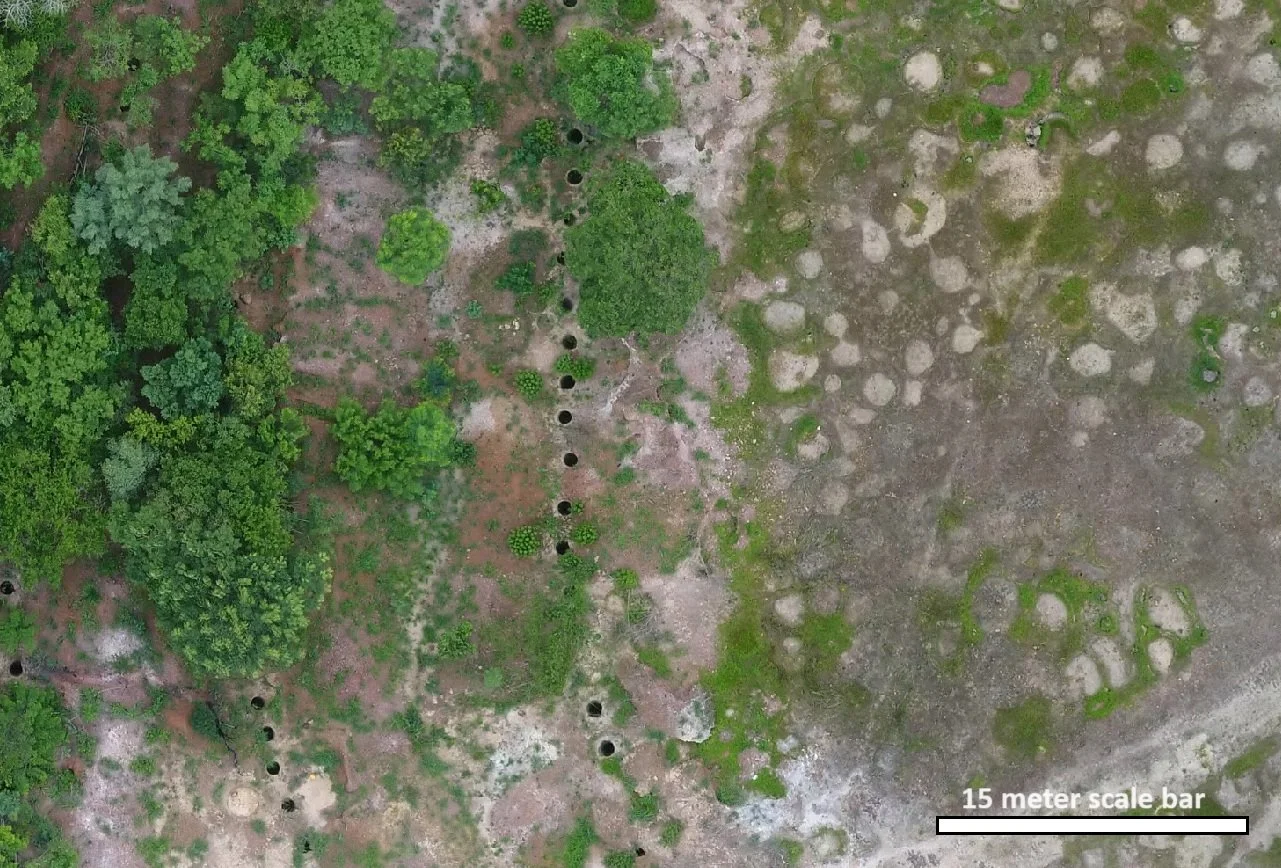
In tropical savannah climate the water table sits much lower than in tropical rainforest climates.
The gold-enriched lower laterite and upper saprolite are targeted by the miners through deep vertical pits. Some pits are up to 30 meters deep and have underground side chambers.
Commonly Asked Questions
-
The best soil sample is B Soil, which is the red laterite soil layer beneath the top soil.
-
Although 28 cm on average can reach the B laterite soil, it is better to follow the soil layers instead of consistent depth.
-
In the tropics, artisanal gold miners often target supergene gold nuggets that are found in the laterite soil.
-
Because Mynah Exploration is highly experienced in all aspects of gold exploration, from grassroots to brownfields. Mynah can easily and quickly assess the exploration potential of a gold project.
-
A technical due diligence of your gold project involves: A deep dive into the project location, artisanal mining history, exploration data, geological theories and examination of resource model (if exists).
-
Deliverables include: A powerpoint outlining the assessment of the gold project, including exploration upside potential, ranked drill targets, technical and political risks, geological model and recommendations.